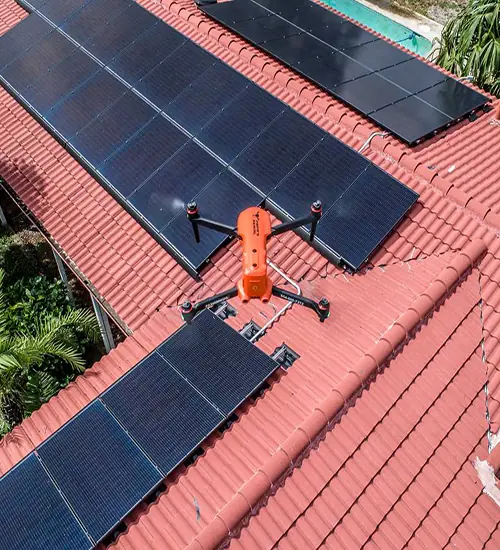
Solar arrays fail quietly. Output drops a few percent, then a few more, and unless somebody is watching production data closely it goes unnoticed for a season. Most of the causes are physical, sitting right on the surface, and completely invisible from the driveway.
What shows up from above
- Soiling: the even film of pollen, salt and road dust that costs output across the whole array without ever looking dirty from ground level
- Shading: a tree that has grown into the afternoon sun since installation, a new vent, a neighboring structure. Shading part of a string can cost far more than its share of the panels
- Debris: palm fronds, branches and windblown material sitting between or on modules, which in Florida is a constant after any wind
- Physical damage: cracked or delaminated modules, hail or debris strikes, lifted mounting hardware
- Racking and roof condition around the array, including staining, ponding and penetration issues a walkthrough would never reach
Why Florida arrays need this more often
Three local conditions stack up. Pollen and salt film build faster here than in most of the country, particularly near the coast. Vegetation grows fast enough that a clean roof in March can be a shaded roof by August. And every storm season puts debris on roofs without doing damage dramatic enough for anybody to climb up and look.
How it works as a routine
- Fly the array from consistent positions and altitude so the passes can be compared
- Do it in flat or early light. Hard midday sun and glare off glass hide exactly what you are looking for
- Pair it with production data, because the images explain what the numbers are already telling you
- Twice a year is a reasonable default in this climate, plus a pass after any significant wind event
What it does not replace
A visual pass finds physical problems. It does not diagnose inverter faults, wiring issues, or degradation with no visible signature. What it does is tell an electrician which part of the roof to go to instead of all of it, and on a large commercial array that difference is most of the cost of the callout.
Common questions
How often should a solar array be inspected from the air?
Twice a year suits most Florida installations, plus a pass after any significant wind event. Coastal arrays carrying heavier salt film may want more than that.
Can you inspect a commercial rooftop array?
Yes, and large flat-roof arrays are where aerial inspection saves the most time, because the alternative is walking the entire roof.
Do you do thermal imaging of panels?
Talk to us about what you need to find. The visual pass covers soiling, shading, debris and physical damage, and we will be straight with you about what it will and will not reveal on your array.
This piece supports two pages worth reading next:
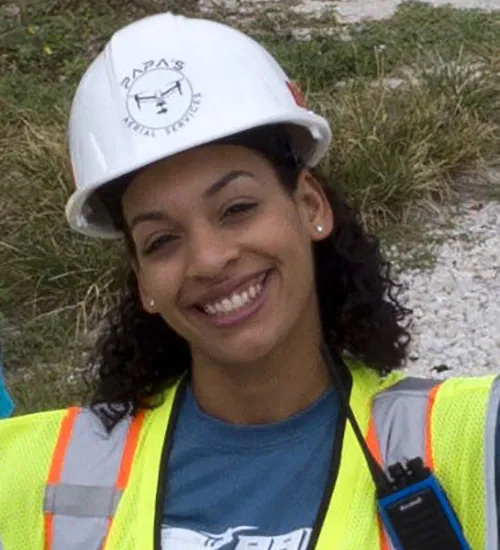
Kaylan flies real estate, construction and inspection work for Papa's Aerial and handles most of the airspace authorization filings that South Florida addresses require.