Falls are still one of the leading causes of death in construction, and a large share of them happen from roofs and ladders. That is the background to any comparison of inspection methods, and it explains why the industry moved to flying roofs as quickly as it did.
What an aerial inspection is good at
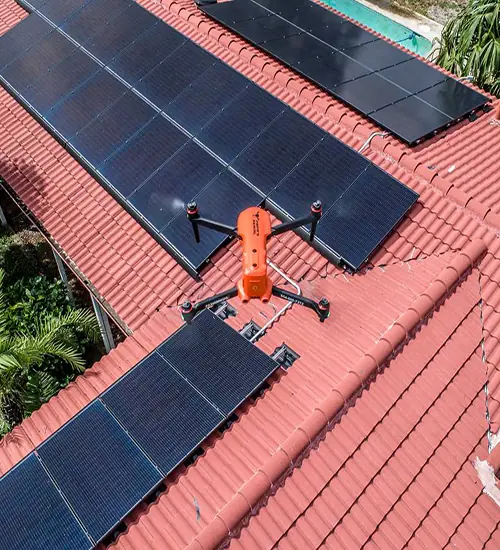
- Speed: a residential roof takes minutes, and a commercial roof or a tower takes a fraction of the time a climb does
- Coverage: every plane, every valley, every penetration, including the sections a ladder cannot safely reach
- Documentation: a dated, geotagged image set an adjuster, an owner or a board can look at without being on site
- Repeatability: fly it again after a storm from the same positions and the comparison is direct
- Nobody on the roof, so no fall exposure, no cracked tile underfoot, no scuffed membrane
What it is not good at
A camera sees the surface. It does not feel a soft deck underfoot, it does not lift a shingle to check what is under it, it does not core a flat roof to find saturated insulation, and it will not find a leak path that only shows itself under water. Anybody telling you an aerial inspection replaces every physical inspection is selling something.
What works in practice is aerial first and hands-on second, aimed at whatever the images turned up. Fly the roof, review the frames, then send a person to the three places that need a person rather than walking the whole thing.
Where this matters most in South Florida
Two things drive roof inspection demand on this coast. Weather is the obvious one, since after any significant wind event insurers want dated evidence and owners want to know before the next rain. The other is the structural and reserve inspection requirements that have reshaped condo governance in Florida since 2021. Boards have become much more interested in keeping a dated visual record of the building envelope, and an aerial set is the cheapest way to start one.
Getting the most out of an aerial inspection
- Book it in flat light where you can. A bright overcast shows surface condition better than hard midday sun
- Say what you are looking for. Post-storm damage, ponding, penetration condition and solar shading are different flight plans
- Ask for the full-resolution frames rather than only a summary PDF, because the detail is the point
- Keep the set. An inspection archive is worth more the second and third time you add to it
Common questions
Will an insurer accept drone photos of roof damage?
Dated, high-resolution aerial imagery is widely used in claims documentation. Whether a specific carrier accepts it in place of their own adjuster's visit is that carrier's call, so it is worth asking them before the shoot.
Can you inspect a roof without the owner present?
We need permission for site access and somebody to reach if a question comes up, but the owner does not usually need to stand outside for the flight.
Do you inspect towers and tall structures too?
Yes, and tower and elevated structure work is a large part of this service. It is also where the safety argument for flying instead of climbing is strongest.
This piece supports two pages worth reading next:

Kaylan flies real estate, construction and inspection work for Papa's Aerial and handles most of the airspace authorization filings that South Florida addresses require.