You earn a remote pilot certificate by passing a written knowledge exam covering regulations, airspace, weather, loading and operations. It is a real test and it matters. What it is not is a check ride. Nobody watches you fly.
That gap stays invisible in good conditions and becomes obvious in bad ones. A pilot who has only flown calm mornings over empty lots is not the same pilot as one who has held a position on a target in a gusting crosswind beside a structure, and no certificate distinguishes between them.
The problem with saying somebody is experienced
Ask most operators about proficiency and what you get back is an anecdote. Hours flown, jobs completed, a story about a difficult shoot. None of that is measurable, none of it is comparable between two pilots, and none of it answers a supervisor, an insurer or an attorney asking how a crew's competence was established in the first place.
What the NIST test methods are
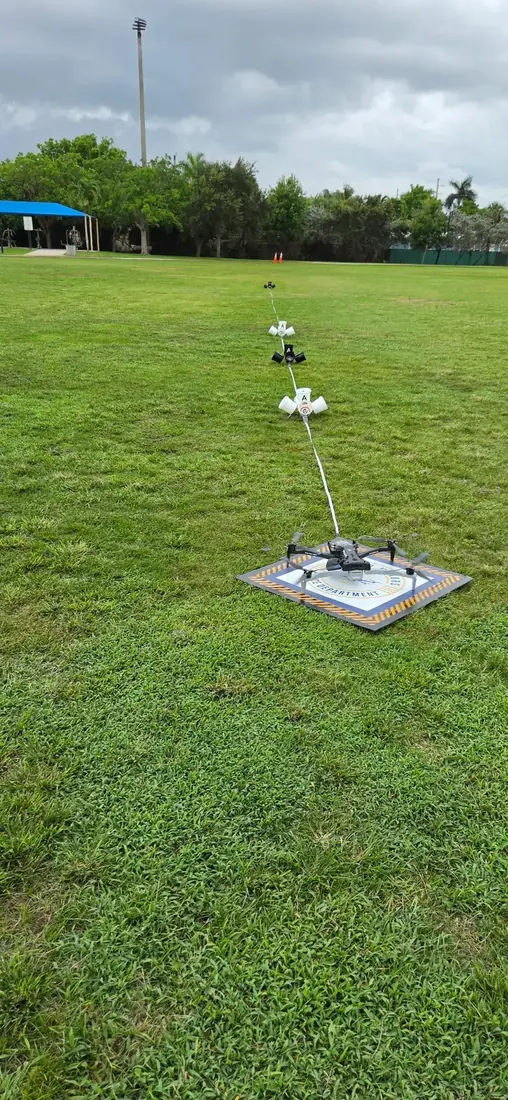
The National Institute of Standards and Technology developed a set of standard test methods for small unmanned aircraft systems. Measured lanes and target stands, set out to published dimensions, flown through defined maneuvers with targets that have to be acquired and read accurately.
Repeatability is the point of it. Because the apparatus and the procedure are standardized, the same evaluation produces comparable results no matter who runs it or where, and it can be run again six months later to show whether a pilot improved, held steady or fell off.
- Maneuvering through a defined course rather than free flight
- Position hold, measured rather than eyeballed
- Target acquisition and accurate reading at distance
- A score, recorded, repeatable, comparable to the last one
Who this is for
Public safety units, where a documented standard is part of how a program gets defended. Commercial crews whose insurers or clients want evidence of competence rather than assurance of it. And individual pilots who hold the certificate, have been flying a while, and want an honest read on where they sit.
What a session looks like
Hands-on flight in the measured lanes, evaluated against the standard test methods, with the maneuvering, position hold and target work each scored. Sessions are delivered by a NIST-credentialed instructor. What you leave with is a documented result you can hand to somebody.
Common questions
Does Part 107 include a flying test?
No. It is a written knowledge exam covering regulations, airspace, weather and operations. There is no practical flight component.
Who should take standardized proficiency training?
Public safety units, commercial crews that need to evidence competence to an insurer or a client, and certificated pilots who want a measured baseline rather than an opinion.
Is this training only for beginners?
No. The value of a measured evaluation is highest for pilots who already fly, because it turns experience into something documented and comparable.
This piece supports two pages worth reading next:

Frantz founded Papa's Aerial Services and flies as pilot in command on commercial jobs across Broward, Miami-Dade and Palm Beach. He holds an FAA Part 107 remote pilot certificate and the company is licensed, insured and authorized for night operations.